
Protecting Your Multifamily Property from 4th of July Activities and Fireworks
June 4, 2025
40 Years of Growth: Home Prices Surpass Income Gains
September 5, 2025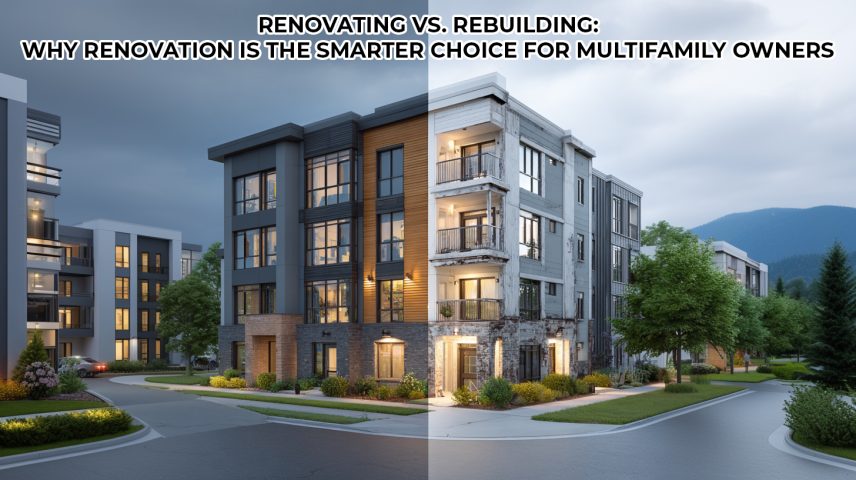
Renovating vs. Rebuilding: Why Renovation is the Smarter Choice for Multifamily Owners
In multifamily real estate, owners frequently face a critical capital investment decision: renovate an existing asset or rebuild from the ground up. While redevelopment may be necessary in certain situations, renovation often provides a stronger return on investment by extending the life of an existing property, reducing capital expenditures, and accelerating revenue growth.
Renovation Preserves Existing Value
An established multifamily community already benefits from existing infrastructure, utility connections, and a proven location. Renovation allows owners to modernize interiors, improve building systems, and enhance curb appeal while preserving the property's underlying value. Strategic upgrades align communities with current residents' expectations without the expense of replacing an entire asset.
Faster Turnaround, Less Operational Disruption
Ground-up construction can require years of planning, permitting, and construction before generating income. Renovation projects can often be completed in phases, allowing communities to minimize downtime and return upgraded units to the market more quickly. This approach helps preserve rental revenue while accelerating the return on capital improvements.
Lower Capital Costs with Meaningful Results
Redevelopment involves high costs beyond construction, including demolition, permitting, impact fees, and site preparation. Renovation typically requires less upfront investment while delivering noticeable improvements through updated interiors, enhanced amenities, improved energy efficiency, and stronger market appeal.
Supporting Sustainability Goals
Reusing existing buildings reduces demolition waste and lowers the environmental impact associated with new construction. As sustainability continues to influence investment decisions and resident preferences, renovating existing assets provides an opportunity to improve performance while reducing environmental impact.
Strengthening Resident Retention
Modern kitchens, updated bathrooms, new flooring, and refreshed amenities contribute to a better resident experience and stronger leasing performance. Renovating in phases also minimizes resident displacement, helping maintain occupancy while positioning the community for future rent growth.
Delivering Strong Long-Term Returns
Because renovations typically require less capital and can generate higher rental income sooner, they often produce a faster return on investment than new construction. For owners focused on improving asset performance and increasing net operating income, renovation remains one of the most effective long-term investment strategies.
The Bottom Line
For many multifamily owners, renovation offers the best balance of cost, speed, and long-term value creation. A well-planned renovation strategy can increase property value, improve resident satisfaction, and strengthen net operating income without the time and expense associated with rebuilding.
At Think Construction Services, we help multifamily owners transform existing communities through strategic interior renovations and property improvements. From unit renovations and common area upgrades to complete property refreshes, our team delivers solutions designed to maximize asset value while minimizing operational disruption.